

Bacterial Zoonoses
A bacterium is a member of a large group of unicellular microorganisms which have cell walls but lack organelles and an organised nucleus. The diseases caused by bacteria are known as bacterial diseases.
.
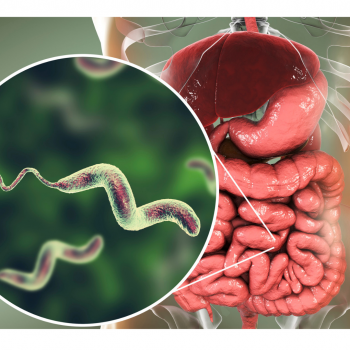
Campylobacteriosis
Campylobacter species like Campylobacter jejuni and C. coli usually results in enteritis (inflammation of the intestine). These organisms live in the GIT of many animals. It is a leading food borne zoonosis however direct contamination from animals has not been unheard of. This bacteria is prevalent in low to middle income countries. This infection usually recovers on its own and only some cases need antibiotic treatment. Majority of dogs and cats get infected sub clinically and some develop a mild-moderate form of enteritis. These bacterial species can persist for long periods of time in faeces, milk, water and urine. Temperature close to 4 degrees Celsius are ideal for Campylobacter spp.
These species majorly colonise in the intestines of poultry, cattle, sheep, cats, dogs and pigs. They shed in the faeces and can be transmitted by the faecal-oral route. They can also spread to people by direct contact with animals. Dog owners are usually at higher risk of getting this disease. Other routes of transmission are consumption of undercooked or contaminated food (meat or otherwise) and water.
In humans-
- Diarrhoea
- Fever
- Abdominal cramps
- Nausea and vomiting
Signs last for a period of 1 week at the least.
In animals-
- Watery to mucoid diarrhoea
- Lethargy
- Vomition
- Fever
- Abdominal cramps
Signs appear for a week or less than that.
Isolation of the causative agents using selective media under microaerophilic conditions. ELISA is unsuitable for diagnosis of this bacteria. PCR based methods can identify this infection effectively.
Improving the sewage sanitary conditions are important along with provision of clean water, public awareness, pasteurisation of milk, proper cooking of food and usage of therapy in cases of infections. Biosecurity at farm levels can be improved to reduce the spread of this disease. Poultry feed should be withheld for 12 hours before slaughter.A hand washing regime should be followed before, during and after preparing the food, before eating and after using the toilet, after coughing, sneezing, blowing nose, after touching pets, cleaning litter boxes, feeding animals, etc.There are many knowledge gaps throughout the world about zoonotic diseases and these gaps should slowly be filled through the right sources and modes of awareness.
Sources:
- https://www.cdc.gov/campylobacter/prevention.html
- https://www.ncbi.nlm.nih.gov/pmc/articles/PMC5319273/
- https://www.msdvetmanual.com/digestive-system/enteric-campylobacteriosis/overview-of-enteric-campylobacteriosis
- https://www.ncbi.nlm.nih.gov/pmc/articles/PMC6861584/
- https://www.ncbi.nlm.nih.gov/pmc/articles/PMC5584092/